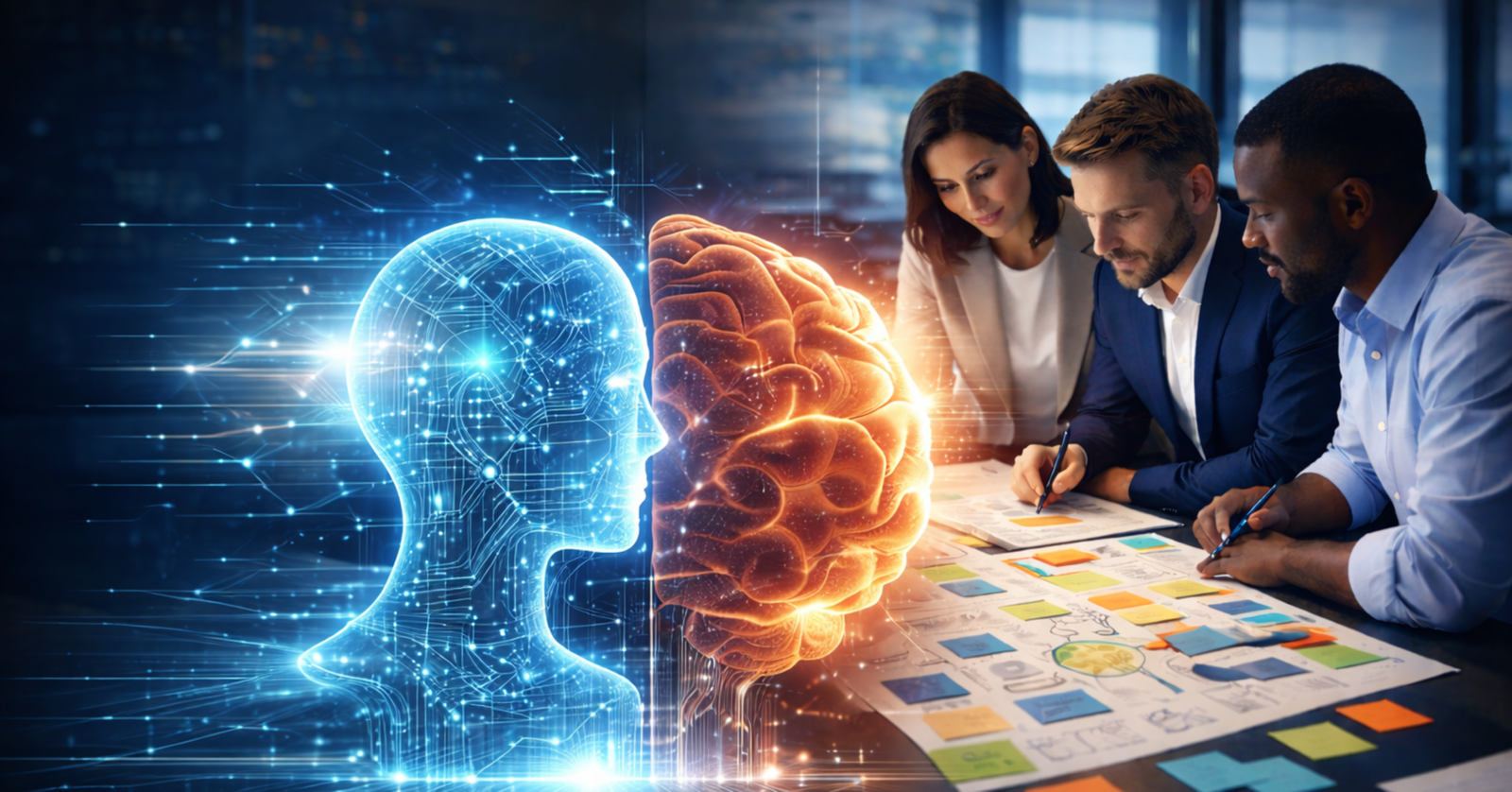
Marketing is moving faster than ever. AI automation in marketing can generate content in seconds, automate customer journeys, predict buying behavior, and optimize campaigns in real time. But as brands race to adopt automation, a new challenge has emerged: how do you scale with AI without losing your brand’s voice, trust, and authenticity?
The tension between efficiency and originality is real. Over-automation can make messaging feel robotic, generic, or disconnected from your audience. Yet ignoring AI means falling behind competitors who are leveraging data-driven personalization and predictive analytics.
The solution isn’t choosing between AI and humans. It’s designing a marketing ecosystem where AI automation in marketing enhances creativity instead of replacing it. In this article, we’ll explore how brands can scale intelligently—using AI to improve performance while preserving the human insight that builds loyalty and long-term brand equity. This balance becomes even more critical when AI is integrated into a broader digital marketing strategy focused on long-term brand growth.

The Rise of AI Automation in Marketing
AI has evolved far beyond simple chatbots and email triggers. Today’s marketing technology stack includes:
- Generative AI for content creation
- Predictive analytics for campaign forecasting
- AI-powered CRM automation
- Real-time personalization engines
- Conversational AI for customer support
With tools powered by advanced machine learning and large language models, marketers can now:
- Produce content at scale
- Analyze massive datasets instantly
- Automate repetitive workflows
- Deliver personalized experiences across channels
According to current market trends, AI adoption in marketing is accelerating across industries—from SaaS and eCommerce to construction technology and enterprise IT. Organizations are prioritizing operational efficiency, speed to market, and data-driven decision-making. This same shift is reshaping how brands structure content for visibility, particularly in AI-driven search environments.
However, scaling output does not automatically translate into meaningful engagement. And that’s where many brands struggle.
The Risk of Over-Automation: When Efficiency Hurts Authenticity
AI-generated content can sound polished—but often lacks emotional nuance. Without proper oversight, brands may face:
- Inconsistent tone of voice
- Generic messaging
- Reduced emotional resonance
- Erosion of customer trust
- Brand dilution
When messaging becomes generic or misaligned, it often mirrors the same issues seen in campaigns where automation outpaces strategy.
Consumers today are highly perceptive. They value transparency, originality, and human connection. Over-automated campaigns can create a sense of detachment, particularly in industries where trust is critical—finance, healthcare, B2B services, and enterprise software.
Authenticity isn’t just a brand value; it’s a competitive advantage. When AI automation in marketing is deployed without creative oversight, that advantage erodes quickly.
AI can analyze behavior.
But humans understand motivation.
AI can optimize conversion paths.
But humans craft stories that move people.
The brands that win will be those that integrate both.
Why Human Creativity Still Drives Brand Differentiation
In saturated digital markets, differentiation is rarely about features alone. It’s about narrative, positioning, and emotional relevance.
Human creativity enables:
- Strategic storytelling
- Cultural sensitivity
- Contextual understanding
- Brand personality development
- Ethical decision-making
This is why content-led strategies continue to outperform purely automated approaches over time.
AI works based on patterns. It predicts what is statistically likely to perform. But breakthrough ideas often emerge from unexpected insights, lived experiences, and strategic intuition—areas where human marketers excel.
For example:
- A campaign that taps into a timely cultural moment
- A brand voice that reflects humor or empathy
- A thought leadership article that challenges industry norms
These are not purely data-driven outputs. They are strategically crafted expressions of brand identity.
To scale responsibly, AI must serve creativity—not replace it.
Building a Hybrid Marketing Model: AI + Human Intelligence
The most successful marketing teams are adopting a hybrid model. Here’s how it works:
1. Use AI for Acceleration, Not Strategy
AI automation in marketing is highly effective at:
- Draft generation
- Data analysis
- A/B testing variations
- Performance optimization
- Workflow automation
However, strategic decisions—brand positioning, campaign concepts, messaging hierarchy—should remain human-led.
AI can propose options.
Humans decide direction.
2. Establish Clear Brand Voice Guidelines
To preserve brand consistency while scaling content production:
- Create detailed brand voice documentation
- Define tone variations by funnel stage
- Establish do’s and don’ts
- Include real examples
Then train internal teams (and AI systems) to align with these standards.
AI performs best when given structured guidance. The clearer your brand framework, the more accurate and consistent automated outputs will be.
3. Implement a Human-in-the-Loop Review System
Automation without oversight increases risk.
Every AI-generated asset—blogs, emails, landing pages, ad copy—should pass through human review for:
- Emotional alignment
- Fact-checking
- Industry relevance
- Ethical compliance
- Strategic intent
This approach maintains speed while protecting brand integrity. It mirrors best practices used in modern marketing automation systems designed for scalability without losing control.

Scaling Personalization Without Losing Trust
One of AI’s most powerful advantages is personalization at scale. Machine learning algorithms analyze:
- Browsing behavior
- Purchase history
- Engagement patterns
- Demographic signals
This enables tailored experiences across:
- Email campaigns
- Website content
- Product recommendations
- Paid advertising
Email automation, when done correctly, demonstrates how personalization can scale without sacrificing trust or relevance. However, hyper-personalization must be handled responsibly.
Consumers are increasingly concerned about data privacy. Transparency is key.
Brands should:
- Clearly communicate data usage
- Offer opt-in choices
- Avoid intrusive messaging
- Align personalization with genuine value
Trust grows when customers feel understood—not surveilled.
Advanced AI Applications Shaping the 2026 Marketing Landscape
The AI marketing ecosystem continues to evolve rapidly. Some of the most impactful developments include:
Generative AI with Brand Memory
Modern AI systems can be trained on proprietary brand data, creating outputs that align more closely with established voice and messaging.
Predictive Customer Journey Mapping
AI models now forecast user behavior across multi-touch journeys, allowing proactive engagement rather than reactive targeting.
AI-Powered Creative Testing
Instead of testing two versions, brands can test dozens of creative variations in real time, optimizing faster than traditional experimentation methods.
Autonomous Campaign Management
AI platforms can automatically adjust budgets, targeting, and messaging based on live performance metrics.
While these technologies increase efficiency, they must remain strategically guided by experienced marketers who understand long-term brand equity.
Creating an AI Governance Framework for Marketing Teams
To balance AI automation with human creativity effectively, organizations should implement structured governance.
An effective AI marketing framework includes:
- Clear usage policies
- Defined approval workflows
- Data security protocols
- Ethical guidelines
- Performance measurement standards
This prevents misuse while maximizing value.
Additionally, cross-functional collaboration between marketing, IT, compliance, and leadership ensures responsible AI adoption.
AI should not operate in isolation. It should integrate into your broader digital strategy.
Practical Workflow: A Balanced AI Marketing Process
Here’s an example of a scalable yet human-centric workflow:
- Strategy defined by senior marketing leadership
- AI generates initial content drafts
- Human editor refines messaging and tone
- SEO specialist optimizes structure and keywords
- AI analyzes performance data
- Marketing team adjusts creative direction
This cyclical model maintains efficiency while protecting authenticity.

The Future of AI Automation in Marketing
AI automation in marketing is no longer optional—it’s foundational. But automation alone does not build brands. People do.
The future belongs to organizations that understand this balance and invest in long-term visibility rather than short-term automation wins.
AI delivers speed, scale, and precision.
Human creativity delivers meaning, emotion, and trust.
When aligned strategically, they create a marketing engine that is both efficient and authentic.
Brands that invest in structured AI adoption, strong creative leadership, and ethical data practices will not only scale—they will lead.
As marketing continues to evolve, the goal isn’t to replace human creativity. It’s to amplify it. Explore how your organization can design a balanced AI-driven strategy that enhances performance while preserving the voice that makes your brand uniquely yours.