How Fast Should Your Website Load? (And Why It Matters for Google)
Imagine this: you click on a website, and it takes forever to load. Within seconds, you get frustrated, hit the back button, and try another site. You’re not alone—this happens to millions of users daily, just because of the website load speed.
In today’s digital landscape, speed is everything. A slow website doesn’t just annoy users; it also hurts your Google rankings, reduces conversions, and costs your business real money. This is why website performance plays a crucial role in long-term SEO success, not just user experience.
So, the big question is: how fast should your website load, and why does it matter so much to Google?
Let’s break it down.
What Is Website Load Speed?
Website load speed (or page speed) is the time it takes for your webpage to fully display its content after a user clicks a link. Google measures this in terms of:
- First Contentful Paint (FCP): When the first piece of content appears.
- Largest Contentful Paint (LCP): When the main content is visible.
- Fully Loaded Time: When everything (images, text, scripts) has loaded.
For users, it’s simple: if your site takes too long, they’ll leave. For Google, speed is a ranking factor that determines whether your site deserves to appear higher in search results.
How Fast Should a Website Load?
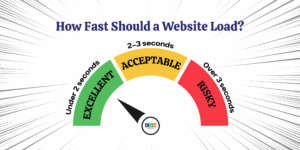
The general rule: your website should load in 2–3 seconds or less.
- Under 2 seconds → Excellent (best for conversions and SEO).
- 2–3 seconds → Acceptable, but room for improvement.
- Over 3 seconds → Risky—bounce rates increase sharply.
According to Google, 53% of mobile users abandon a site that takes longer than 3 seconds to load. That means if your site is slow, you’re losing more than half your potential customers before they even see your content.
Why Website Speed Matters for Google
Google is obsessed with user experience and speed is a big part of that. Here’s why it matters:
1. SEO Rankings
Google has made Core Web Vitals part of its ranking algorithm. These metrics measure how quickly your page loads, how interactive it is, and how stable it feels. Faster sites = higher rankings.
2. Bounce Rate
A high bounce rate tells Google your site isn’t satisfying users. Slow load times cause visitors to leave instantly, signaling poor experience.
3. Mobile-First Indexing
Since most searches happen on mobile, Google prioritizes fast-loading, mobile-friendly sites. If your site lags on mobile, your rankings suffer. This is especially critical for businesses relying on mobile-driven website development.
4. Conversion Rates
Google’s own research shows:
- A 1-second delay can reduce conversions by 7%.
- A site that loads in 1 second has 3x higher conversion rates than one that loads in 5 seconds.
Simply put: speed impacts not only your visibility but also your bottom line.
The Business Impact of Website Speed
A slow website isn’t just a technical issue—it’s a revenue killer.
- E-commerce Example: If your online store makes $10,000/day, a 1-second delay could cost you $250,000 per year in lost sales.
- Lead Generation Example: A slow landing page reduces form submissions, shrinking your pipeline of leads.
- Brand Perception: Users perceive fast websites as more professional, reliable, and trustworthy.
Speed directly impacts sales, leads, and long-term customer loyalty.
How to Check Your Website Speed
Before you fix speed, you need to measure it. Free tools include:
- Google PageSpeed Insights (analyzes Core Web Vitals).
- GTmetrix (detailed performance report).
- Pingdom Tools (tests from multiple locations).
- WebPageTest.org (advanced breakdowns).

Run your site through these tools and note the average load time. If it’s above 3 seconds, you need optimization.
How to Make Your Website Load Faster
The good news: improving speed isn’t rocket science. Here are proven fixes:
1. Optimize Images
Large, uncompressed images are the biggest culprits of slow speed.
- Compress images with tools like TinyPNG.
- Use modern formats (WebP).
- Serve responsive images for mobile.
2. Use Fast Hosting
Cheap, overcrowded hosting slows down your site. Invest in a reliable hosting provider with good server response times.
3. Minimize HTTP Requests
Every image, script, and style file is a request. Fewer requests = faster load. Combine CSS/JS files and remove unnecessary plugins.
4. Enable Browser Caching
Caching stores parts of your site so returning visitors don’t have to reload everything.
5. Use a Content Delivery Network (CDN)
CDNs like Cloudflare or AWS serve your site from the nearest server location, reducing load times globally.
6. Optimize Code
- Minify CSS, HTML, and JavaScript.
- Remove unused code.
- Load scripts asynchronously where possible.
7. Mobile Optimization
Ensure your site adapts to mobile devices with responsive design and lightweight elements.
Common Mistakes That Slow Websites Down
Even well-designed websites can be slow if you:
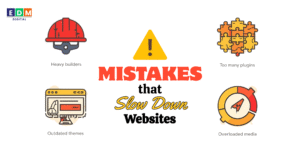
- Use heavy page builders without optimization.
- Add too many third-party plugins.
- Ignore updates for themes and plugins.
- Overload pages with videos, animations, or sliders.
Remember: simplicity often leads to speed. So, Regular updates and monitoring are part of effective website maintenance, not one-time fixes.
How Fast is Fast Enough? (Industry Benchmarks)
Here’s what top-performing websites achieve:
- Google: Loads in ~0.5 seconds.
- Amazon: Average load time is under 2 seconds.
- Industry Standard: Aim for under 3 seconds for all devices, especially mobile.
The closer you get to 1 second, the better your conversions and rankings will be.
Final Thoughts: Speed = Sales + SEO
Your website’s speed is more than a technical detail—it’s a competitive advantage. Google rewards fast-loading sites with higher rankings, and users reward them with more conversions.
To recap:
- Aim for 2–3 seconds maximum load time.
- Optimize images, code, and hosting.
- Monitor speed with tools regularly.
- Fix issues quickly to keep both Google and users happy.
A fast website doesn’t just rank higher—it makes more money.
Want a lightning-fast website that ranks higher on Google and converts more customers? Our team specializes in website speed optimization and Core Web Vitals improvement as part of our performance-focused SEO services.
Contact us today and make your website faster than your competition.