Smart Email Workflows That Convert Customers on Autopilots
Email marketing is one of the most reliable channels for generating leads and sales. But sending one-off newsletters or blasting the same message to your entire list no longer works. Customers expect timely, personalized, and relevant communication.
The solution? Smart email workflows.
With the right workflows in place, you can nurture leads, convert customers, and even re-engage inactive buyers—all while running on autopilot. Instead of manually sending emails, modern marketing automation ensures the right message goes out at the right time, every time.
In this guide, we’ll explore the most effective email workflows that turn subscribers into paying customers without extra effort.
Why Email Workflows Matter
Think of an email workflow as a pre-built customer journey. Each step is triggered by an action—like signing up, making a purchase, or abandoning a cart.
Why does this matter? Because timing is everything in marketing. A well-crafted workflow ensures:
- Leads don’t fall through the cracks.
- Customers receive information when they need it most.
- You save time while building stronger relationships.
The best part? Once set up, these workflows run automatically, generating conversions while you focus on other areas of your business.
Smart Email Workflows That Drive Conversions
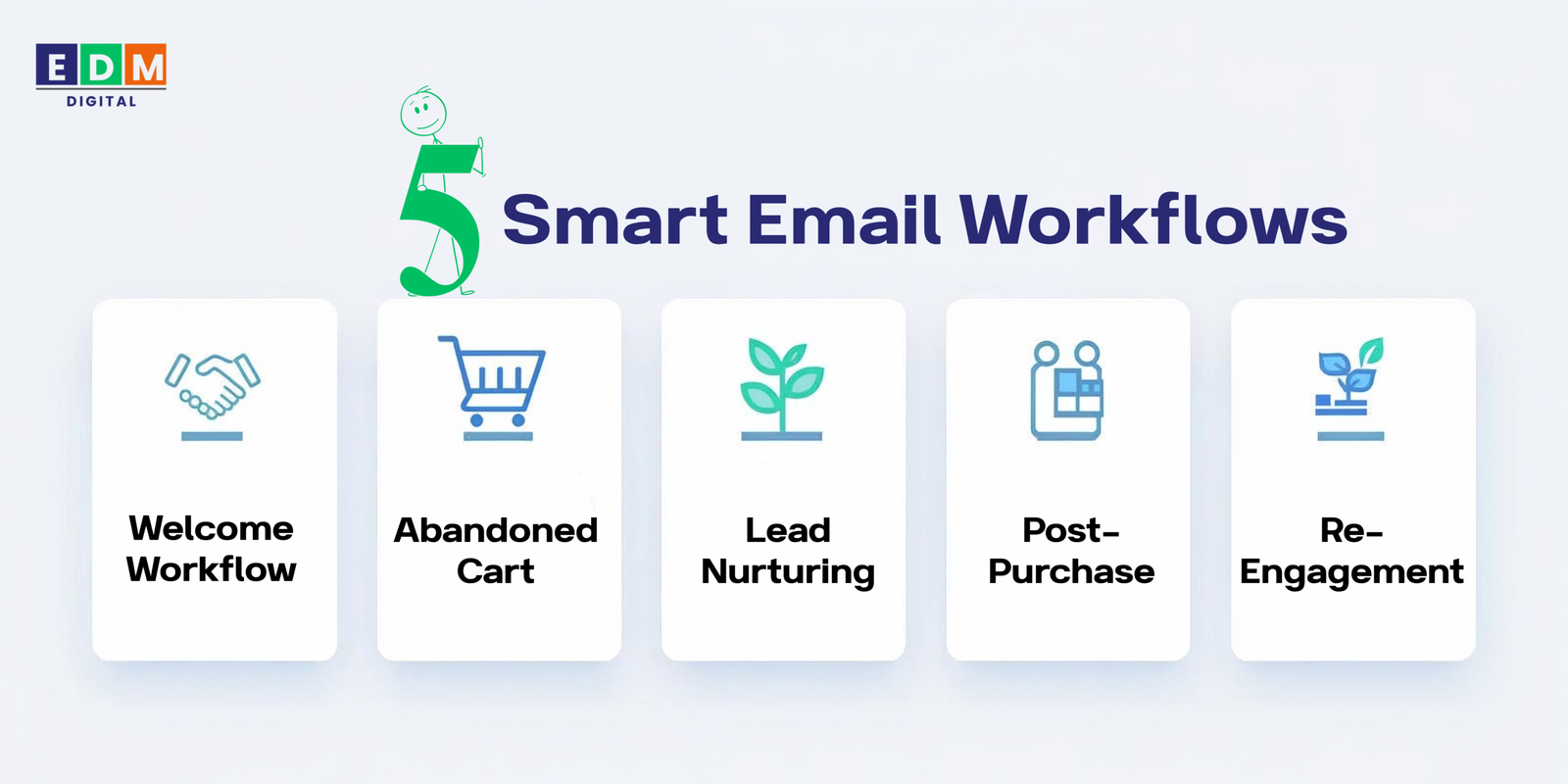
1. The Welcome Workflow
First impressions count. A welcome series introduces your brand to new subscribers and sets the tone for future communication.
A typical welcome workflow includes:
- Email 1: Thank them for subscribing and share your brand story.
- Email 2: Provide value—like a free guide, discount code, or helpful tips.
- Email 3: Encourage the first action, whether that’s a purchase, booking, or joining a community.
Why it works: New subscribers are most engaged in the first few days. A welcome series capitalizes on that attention.
2. The Abandoned Cart Workflow
For e-commerce, cart abandonment is one of the biggest missed opportunities. On average, nearly 70% of online shopping carts are abandoned.
An abandoned cart workflow reminds customers about the products they left behind and nudges them to complete the purchase.
A proven sequence looks like this:
- Email 1: Gentle reminder with product images.
- Email 2: Social proof—reviews or testimonials.
- Email 3: Limited-time offer or free shipping incentive.
Why it works: These emails re-engage high-intent shoppers and recover revenue that would otherwise be lost.
3. The Lead Nurturing Workflow
Not every lead is ready to buy right away. When aligned with structured lead generation strategies, nurturing workflows educates prospects, builds trust, and gradually guides them toward conversion.
This workflow typically includes:
- Educational content addressing customer pain points.
- Case studies or success stories that build credibility.
- A clear call-to-action when the time is right.
Why it works: It keeps your brand top-of-mind until the customer is ready to take action.
4. The Post-Purchase Workflow
The customer journey doesn’t end at the sale. A post-purchase workflow helps build loyalty and encourage repeat purchases.
This sequence often includes:
- A thank-you email confirming their order.
- Helpful tips or product usage guides.
- Cross-sell or upsell recommendations.
- A request for reviews or feedback.
Why it works: It enhances the customer experience, increases lifetime value, and strengthens your reputation.
5. The Re-Engagement Workflow
Over time, some subscribers go quiet. Instead of letting them slip away, a re-engagement workflow tries to bring them back.
Examples include:
- A “We miss you” message with a special offer.
- A survey to understand why they disengaged.
- Exclusive updates or new product announcements.
Why it works: It’s often cheaper to win back an old customer than to acquire a new one.
Tips for Building High-Converting Workflows
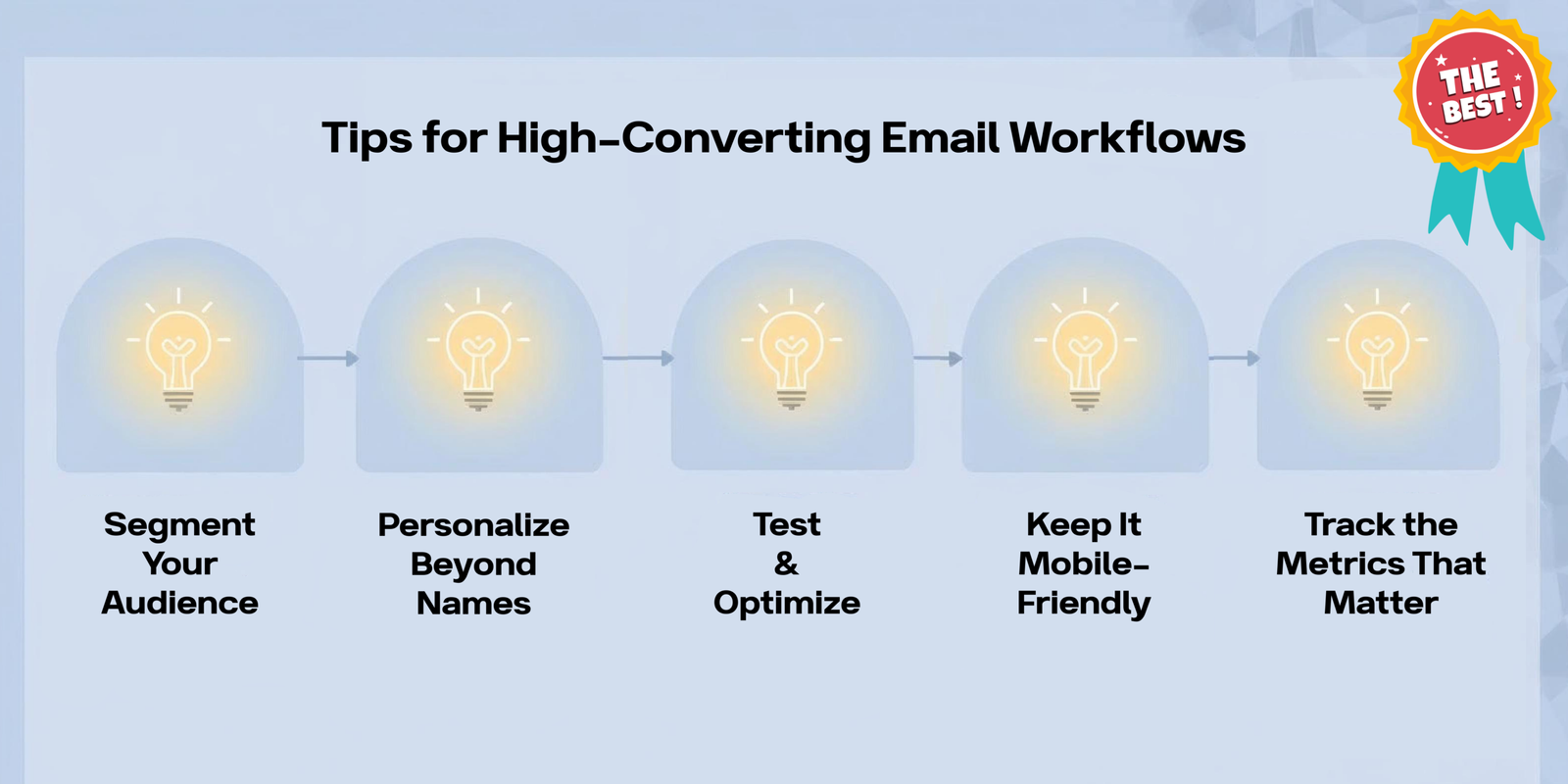
1. Segment Your Audience
Don’t treat all subscribers the same. Segment by behavior, location, purchase history, or engagement levels to make workflows more relevant.
2. Personalize Beyond Names
Use dynamic content—like showing different products based on browsing history—to make emails feel tailor-made.
3. Test and Optimize
Experiment with subject lines, send times, and CTAs. Even small tweaks can lead to big improvements in open and conversion rates.
4. Keep It Mobile-Friendly
Most people check email on their phones. Clean layouts, short copy, and clear CTAs are essential.
5. Track the Metrics That Matter
Open rates and click-throughs are useful, but focus on conversions and revenue to measure real ROI.
Real-World Example
Imagine a small online skincare brand. With no automation, they send generic newsletters once a month. Engagement is low, and sales are inconsistent.
After setting up smart workflows:
- New subscribers receive a welcome discount and brand introduction.
- Shoppers who abandon their carts get reminders with testimonials and free shipping.
- Customers who buy once are guided toward complementary products in a post-purchase sequence.
- Inactive subscribers receive re-engagement offers.
Within three months, their email revenue doubles—all because workflows turned one-off emails into automated customer journeys.
Final Thoughts
Smart email workflows are the backbone of modern email marketing. They deliver the best results when integrated into a larger digital marketing strategy rather than running in isolation. Thereby, saving time, nurturing leads, and converting customers on autopilot.
The key is to start with the basics: welcome, abandoned cart, post-purchase, and re-engagement workflows. Then, refine with segmentation, personalization, and testing to maximize results.
When done right, email automation doesn’t feel robotic—it feels like you’re having the right conversation at the right time. And that’s exactly what turns subscribers into loyal customers.
Want to set up smart email workflows that generate leads and sales while you sleep? Our team helps businesses build high-converting automation systems tailored to their goals.
Contact us today and start converting customers on autopilot.