
Imagine spending hours writing content that nobody ever finds. Frustrating, right? That’s exactly what happens when you skip keyword research.
Keywords are the words and phrases people type into search engines when they need something.
If your business shows up for the right keywords, you get more visitors, more leads, and more sales. If you pick the wrong ones, your content just sits there, ignored.
The good news is that finding the right keywords isn’t as hard as it sounds. In this guide, we’ll walk you through simple steps to discover keywords that actually bring results.
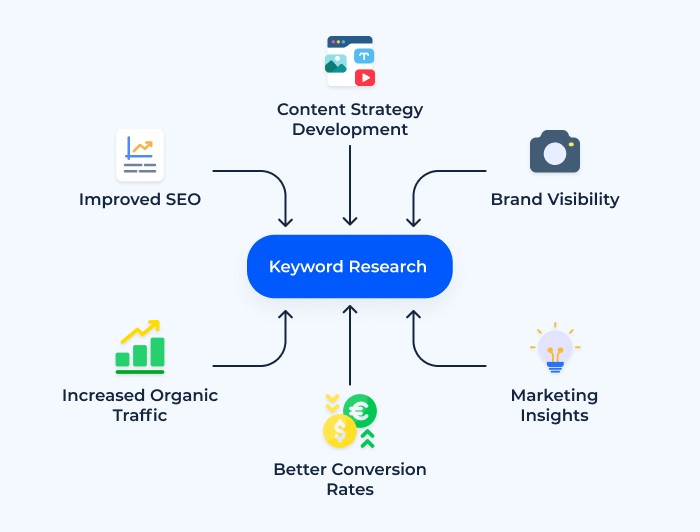
Before we jump into the how let’s quickly cover the why.
Keywords connect your business to the people searching for it. When someone types “best coffee shop near me” or “affordable web design services, they have a specific need.
If your website targets these exact phrases, search engines like Google can match your content to that search.
In short, the right keywords help you:
- Get found by people who are actually interested in what you offer
- Rank higher on search engines
- Attract visitors who are more likely to become customers
Save time and money on ads by relying on organic traffic
Now, let’s get into the process.

Step 1: Understand Your Audience First
Every good keyword strategy starts with understanding your audience. Ask yourself: who are my ideal customers, and what problems are they trying to solve?
Think about their pain points, questions, and goals. For example, if you sell yoga mats, your audience might search for terms like “best yoga mat for beginners” or non-slip yoga mat.
Knowing your audience helps you think like them, which makes keyword research much easier.
Step 2: Brainstorm Seed Keywords
Once you know your audience, start with a simple brainstorm. Write down basic words related to your business. These are called “seed keywords.”
For instance, if you run a bakery, your seed keywords might include:
- Bakery
- Custom cakes
- Fresh bread
- Birthday cakes near me
These seed keywords act as a starting point. From here, you can expand into more specific and detailed phrases.
Step 3: Use Keyword Research Tools
Next, it’s time to bring in some help. Keyword research tools make this process faster and more accurate. They show you search volume, competition level, and related keyword ideas.
Some popular tools include:
- Google Keyword Planner – free and great for beginners
- Ubersuggest – simple interface with useful suggestions
- Ahrefs – powerful but more advanced
- SEMrush – great for competitor research
- Answer The Public – shows real questions people ask
Simply enter your seed keywords into these tools, and they will generate a list of related terms along with useful data.
Step 4: Focus on Search Intent
Not all keywords are created equal. This is where search intent comes in. Search intent means understanding why someone is searching for a particular term.
There are generally four types of intent:
- Informational – the user wants to learn something (e.g., “how to bake bread”)
- Navigational – the user wants to find a specific website (e.g., “Nike official site”)
- Commercial – the user is comparing options before buying (e.g., “best laptops for students”)
- Transactional – the user is ready to buy (e.g., “buy running shoes online”)
Understanding intent helps you choose keywords that match what your audience actually wants.
For example, if you want more sales, focus on transactional keywords. If you want more traffic and brand awareness, informational keywords work well too.
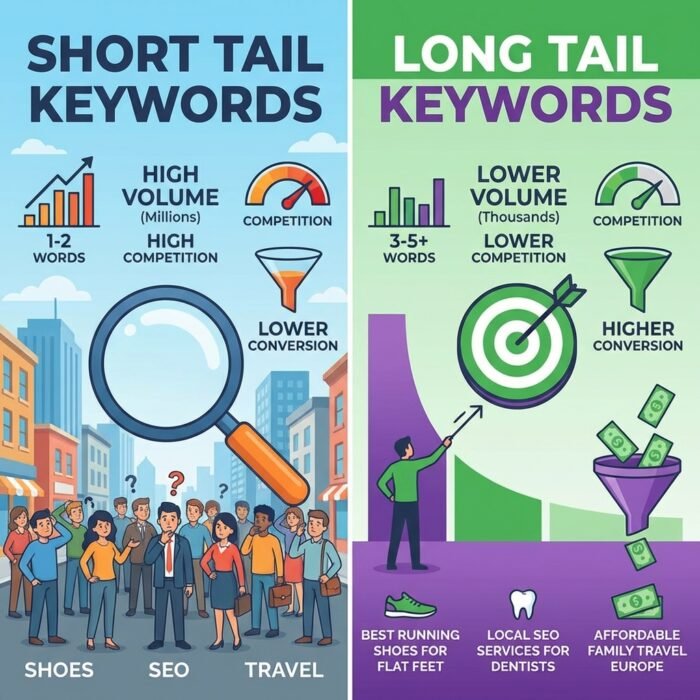
Step 5: Analyze Long-Tail Keywords
Long-tail keywords are longer, more specific phrases. Instead of just “shoes,” a long-tail keyword would be “comfortable running shoes for flat feet.”
Although long-tail keywords get less search volume, they usually have less competition.
As a result, it’s easier to rank for them. Plus, they often bring in more targeted traffic since the searcher knows exactly what they want.
So, don’t ignore long-tail keywords. In fact, they can be a goldmine for small businesses trying to compete with bigger brands.
Step 6: Check Out Your Competitors
Another smart move is to see what keywords your competitors are ranking for. This gives you insight into what’s already working in your industry.
Tools like Ahrefs or SEMrush let you enter a competitor’s website and see their top-performing keywords.
From there, you can find gaps—keywords they haven’t targeted yet—and use them to your advantage.
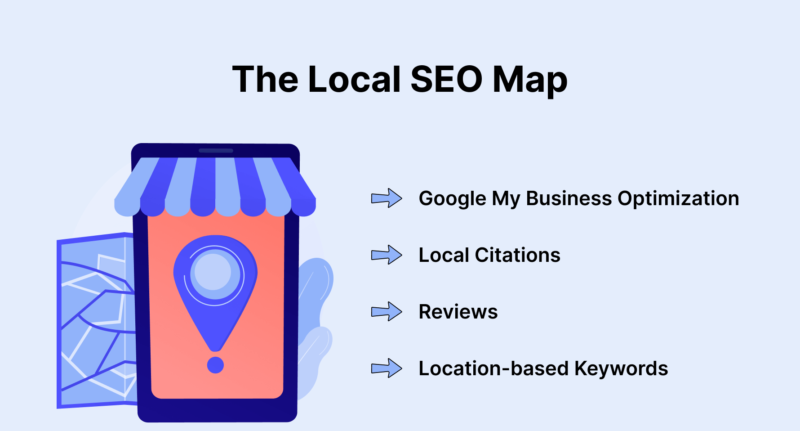
Step 7: Consider Local Keywords
If you run a local business, local keywords are essential. These include your city, neighborhood, or region along with your service. For example, “plumber in Austin” or “dentist near downtown Chicago.”
Local keywords help you show up in local search results and Google Maps, making it easier for nearby customers to find you.
Step 8: Prioritize and Organize Your Keywords
Once you have a solid list, it’s time to organize them. Group similar keywords together and prioritize based on:
- Search volume
- Competition level
- Relevance to your business
- Search intent
This way, you can plan your content strategy more effectively, targeting the most valuable keywords first.
Step 9: Track and Adjust Over Time
Keyword research isn’t a one-time task. Search trends change, and so do customer behaviors. Therefore, it’s important to regularly review your keyword performance and adjust your strategy as needed.
Use tools like Google Search Console to track which keywords are driving traffic and which ones need improvement.